
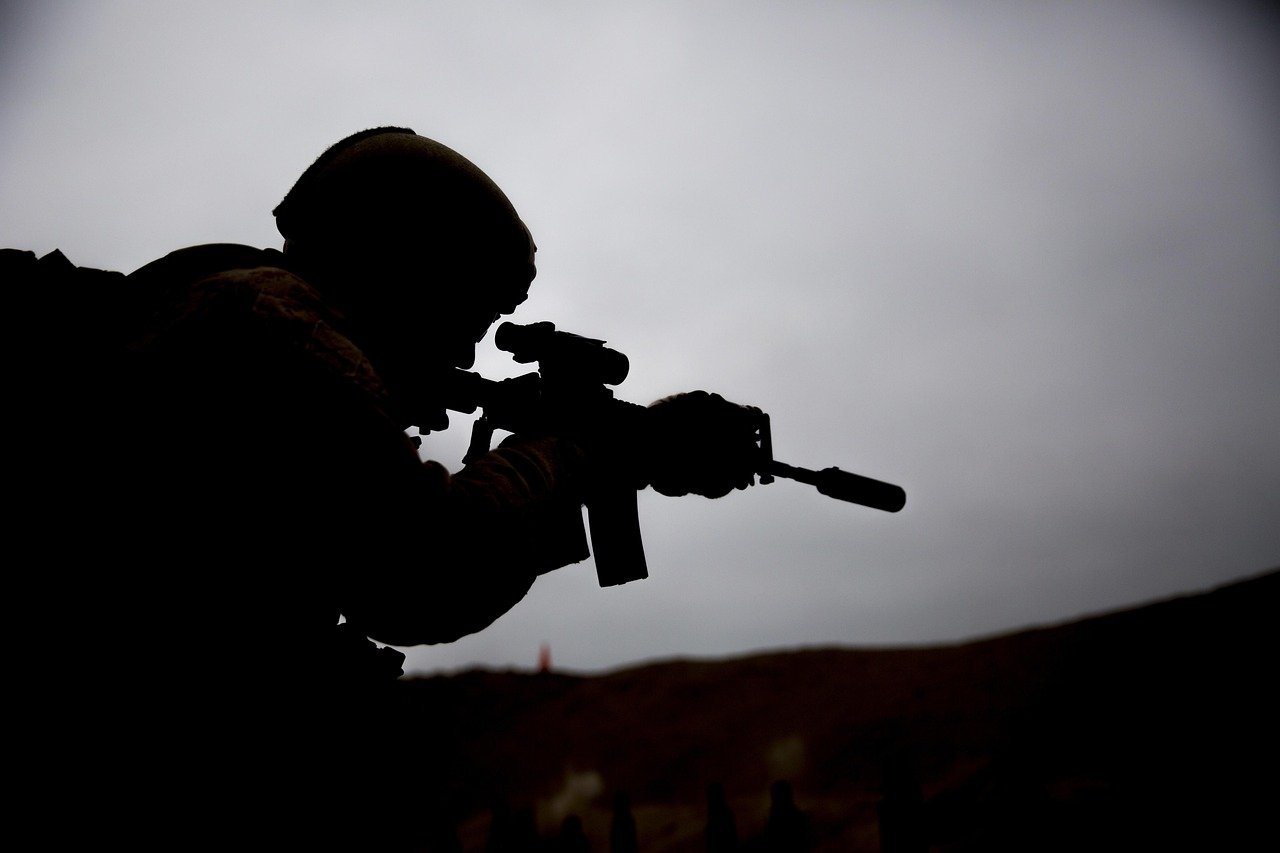
Private military companies (PMCs) blur the line between public and private control of force , raising questions about who can legitimately use force in the International system.
The very essence of the modern state , defined by Max Weber , German sociologist and political economist, as the monopoly on the legitimate use of physical force is now threatened, as private military companies successfully turn the right to wage war into a business for hire.
Firstly , governments hire PMCs primarily to solve their issues of public opposition to war. Hiring private soldiers allows great powers to pursue strategic goals, even in unpopular wars without risking domestic military casualties, a tactic known as casualty aversion.
The second motive is pure market efficiency. PMCs are highly flexible, deploy quickly, and are often more cost-effective and high-tech. Under this market logic , security transformed from a public duty into a tradable commodity, a profitable business opportunity.
However, this convenience creates an immediate global accountability crisis. PMCs operate across borders with minimal regulation, meaning their profit-driven actions often escape both military and international law. The example of Blackwater in Iraq showed how private actors, driven by contracts rather than duty, can act beyond the boundaries of clear accountability.
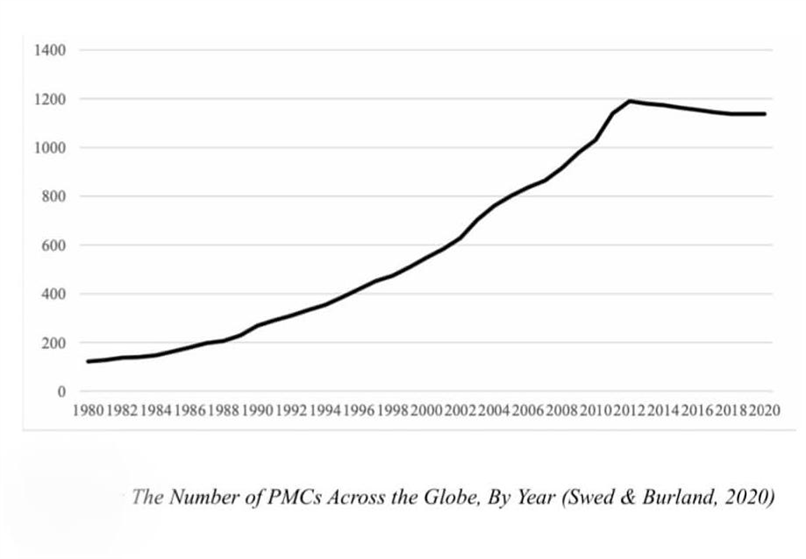
The post-Cold War era opened a massive, immediate market for violence, proving that security was no longer just a state duty but a profitable business.This chart shows the number of PMCs globally exploded from roughly 150 in 1980 to a peak of nearly 1,200 by 2012, illustrating the rapid commercialization of warfare.
Is it actually a good option ?
The spread of PMCs carries serious consequences for global security:
Accountability: When contractors commit abuses, responsibility is easily diffused between the company and the hiring state.
Sovereignty: outsourcing force reduces the state‘s ability to control its own security.
Peace/profit paradox : When war becomes profitable, peace becomes less valuable.
War as business may be efficient, but it normalizes violence and distances governments from the human cost of their choices.
Privatizing war may make conflict cheaper and more adaptable, but it also makes it harder to control. The rise of private armies undermines state sovereignty and raises profound moral questions. Who has the right to use violence in the name of security? Who is accountable when private soldiers act beyond the law?
Perhaps the real question is not whether privatizing force is efficient or profitable, but whether a world where war has become a business can ever truly be secure.